Roadside Help Solves On-Site Problems
If the battery needs a jump, keys are locked inside, fuel is out, or a usable spare can replace a flat, roadside assistance may get the vehicle moving without transport.
Tucson Towing Co. hears this question every week from stranded drivers across Pima County. The short answer is no: roadside assistance handles common problems where the vehicle stops, while towing transports a vehicle that cannot be driven safely. Knowing which service fits can save time and avoid unexpected mileage charges on Interstate 10, Interstate 19, and local Tucson roads.
If the battery needs a jump, keys are locked inside, fuel is out, or a usable spare can replace a flat, roadside assistance may get the vehicle moving without transport.
A tow is appropriate when a vehicle cannot be driven safely because of a collision, transmission failure, or a damaged tire with no usable spare. The vehicle is then moved to a repair shop or another destination.
A policy or membership can limit towing by distance, dollar amount per incident, or number of service calls per year. Confirm those terms and whether reimbursement requires paying the operator first.
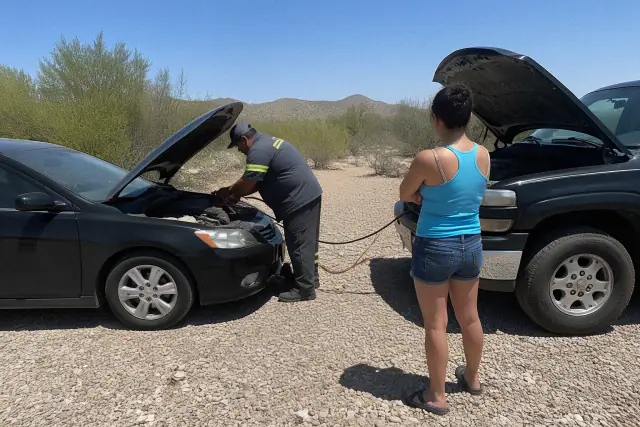
A roadside technician connects jump equipment to a car in a Tucson parking lot during July heat above 100 degrees. The scene illustrates a problem that can often be resolved without transporting the vehicle.
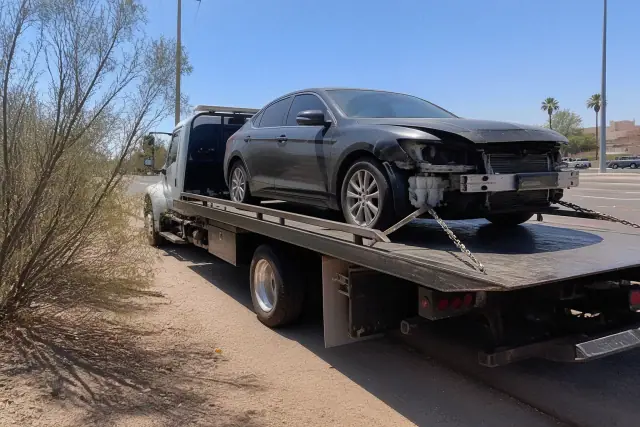
An all-wheel-drive car is secured with all four wheels off the ground. This demonstrates why a flatbed tow is a transport service rather than an on-site fix.
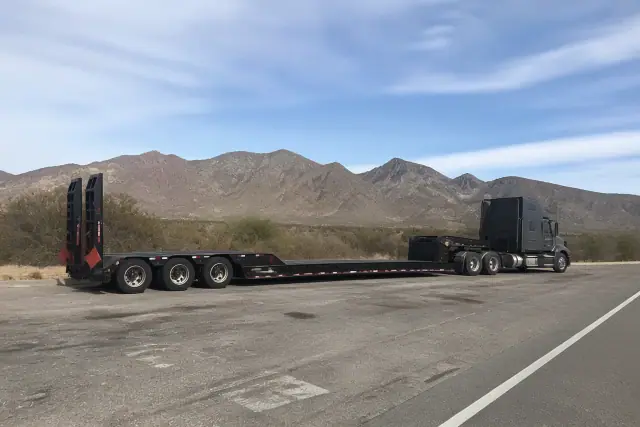
A tow leaves the Tucson metro area on a desert highway, with route context toward Phoenix 108 miles northwest and the border 60 miles south. Long-distance transport typically sits outside a basic roadside plan's mileage allowance.
A dead battery, lockout, empty tank, or flat tire with a usable spare usually points to roadside assistance. A vehicle that is unsafe to drive points to towing.
Check the included towing distance, dollar limit, allowed service calls, and reimbursement method. Insurance-based coverage may require upfront payment and a receipt before reimbursement.
Use towing or accident recovery when crash damage or mechanical failure makes driving unsafe. Collision removals on Arizona public roads may also involve law-enforcement coordination under Arizona Revised Statutes Title 28.
Do not assume roadside coverage pays every mile, vehicle class, or recovery type. Ask about over-mileage charges, heavy-duty exclusions, and where the vehicle may be taken before dispatch.
| Vehicle situation | Likely first service | Why |
|---|---|---|
| Dead battery, lockout, empty tank, or flat tire with a usable spare | Roadside assistance | The problem can often be handled where the vehicle sits. |
| Collision damage, transmission failure, or no usable spare | Towing | The vehicle cannot be driven safely and must be transported. |
| Long-distance, heavy-duty, or accident recovery | Direct towing or recovery | These jobs generally exceed standard roadside mileage or equipment limits. |
Roadside assistance and towing are related, but not interchangeable. Roadside work aims to restore mobility at the stop location; towing is the transport step when an on-site fix is not possible or safe. In Arizona, roadside coverage is generally an optional insurance add-on rather than a free mandated benefit.
Vehicle condition, destination, vehicle class, time of day, and policy terms all shape the decision. For 24/7 calls across Pima County's 1.08 million-resident metro area, distance from corridors such as Interstate 10, Interstate 19, and Speedway Boulevard can affect dispatch timing. A direct local tow may be faster than an insurer's dispatch process toward Vail, Marana, or Green Valley.
Does roadside assistance include towing? Usually, but only within the plan's destination, mileage, call-count, or dollar limits. Is it part of standard auto insurance? Often not; it is commonly purchased as an optional rider or membership. Does it pay for repairs? Coverage generally pays for the service call, included labor and mileage, and sometimes a battery-not the underlying vehicle repair.
Tell dispatch where the vehicle is, what happened, whether it is safely off the roadway, and whether you have a usable spare. That information helps determine whether roadside assistance can solve the issue on-site or a tow is the safer next action.