Proudly serving Tucson, Oro Valley, Marana, Sahuarita, Green Valley, Vail & surrounding areasCall or Text 24/7: +1 (520) 567-5263

Emergency Towing & Roadside Assistance in Sahuarita, AZ

Tucson Towing Co. provides 24/7 emergency towing, roadside assistance, flatbed towing, and towing for motorcycles and light-, medium-, and heavy-duty vehicles throughout Sahuarita and the surrounding Pima County area. We also handle accident recovery, long-distance towing, car lockouts, and jump starts across Rancho Sahuarita, Quail Creek, Madera Highlands, and the Nogales Highway and Sahuarita Road corridor. Drivers can call for help on I-19 or local roads when a breakdown, collision, dead battery, flat tire, or lockout leaves a vehicle stranded.

A radiator failure at 2 p.m. in July or a snapped fan belt during monsoon season can quickly expose drivers and passengers to heat, traffic, and isolation. Sahuarita's mix of commuter vehicles, mining traffic near the Sierrita operations, and freight moving toward Nogales calls for equipment matched to the vehicle and the recovery. Dispatchers gather precise location and vehicle details so the nearest suitable truck can respond with less guesswork.

When calling from I-19, share the nearest mile marker or exit along with your vehicle type and situation. That information helps dispatch select the right truck and prepare for the roadway conditions before arrival.

★ ★ ★ ★ ★4.9/5 Average Rating - 20+ Years of Experience - Sahuarita Towing Company Specialists - Residential & Commercial
Emergency Vehicle Help

Towing & Roadside Services in Sahuarita, AZ

From 24/7 emergency calls to scheduled long-distance transport, Tucson Towing Co. handles passenger vehicles, work trucks, motorcycles, commercial rigs, and roadside problems throughout Sahuarita. The service area includes Rancho Sahuarita, Quail Creek, Madera Highlands, Continental, Corona de Tucson, Tucson, and Pima County roads; drivers heading south can also find towing support in Green Valley, AZ .

Emergency Towing

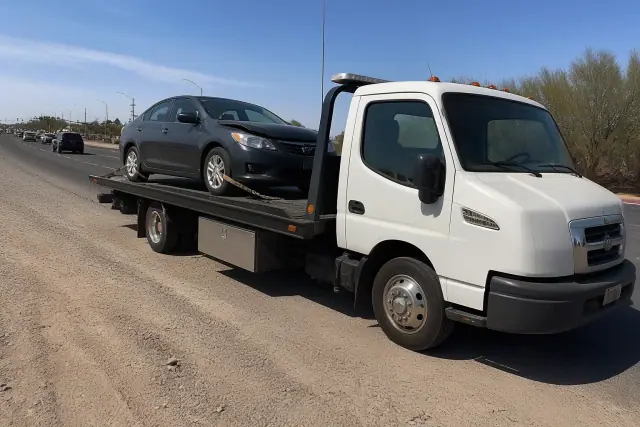
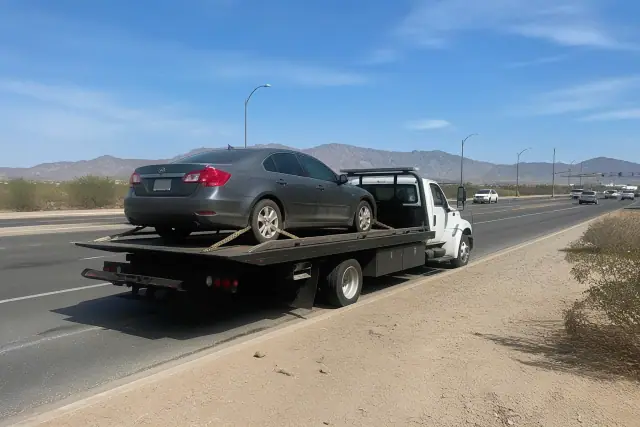
A flatbed truck securing a disabled sedan on a road in Sahuarita, AZ, with desert mountains in the background.

Around-the-clock towing connects callers with a real person who can dispatch a truck instead of leaving a stranded driver waiting on hold. Dispatchers familiar with Sahuarita's street grid and I-19 exits use the caller's location and situation to route an available unit. Explore Service

Explore Service
Roadside Assistance

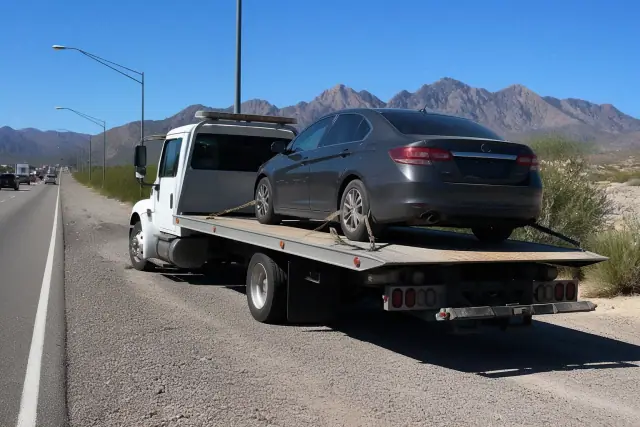
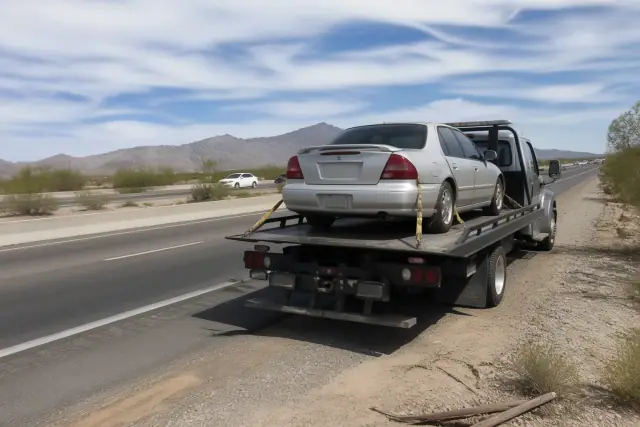
A flatbed tow truck carrying a disabled sedan on a highway shoulder in Sahuarita, AZ with desert mountains in the distance.

Roadside assistance covers flat-tire changes, fuel delivery, and minor mechanical help when a full tow is unnecessary. Trucks carry tools for these calls throughout Sahuarita, Green Valley, and surrounding unincorporated county areas. Explore Service

Explore Service
Flatbed Towing

A flatbed tow truck with a disabled sedan on the highway shoulder in Sahuarita, AZ with desert mountains in the background.

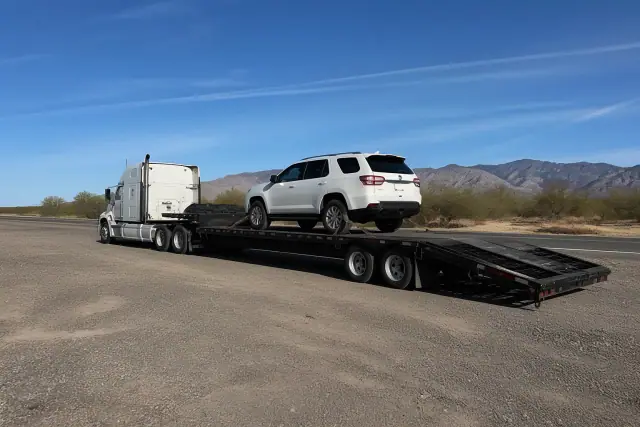
Flatbed transport lifts all four wheels off the ground, making it suitable for lowered vehicles, classics, motorcycles, and vehicles with existing frame or drivetrain damage. It also protects newer vehicles with lane-assist cameras and parking sensors mounted low on the bumper. Explore Service

Explore Service
Motorcycle Towing

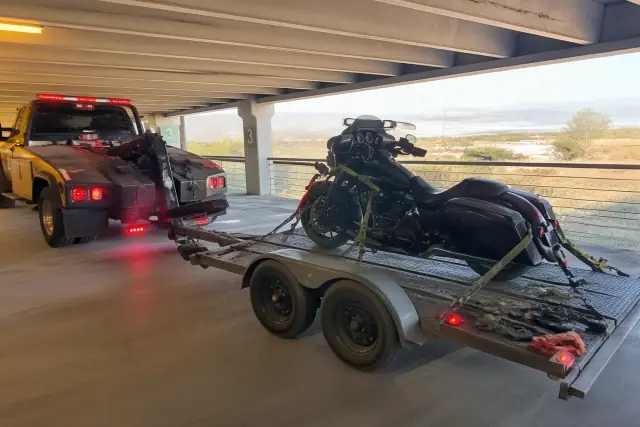
Motorcycle secured on a trailer in a concrete parking structure in Sahuarita, AZ.

Motorcycles are transported flat with specialized wheel chocks and soft-tie straps that secure the bike without crushing the frame or damaging fairings, exhaust, or paint. The destination can be a home garage or a repair shop.

Light Duty Towing

Flatbed tow truck with a disabled sedan secured on the side of a road in Sahuarita, AZ.

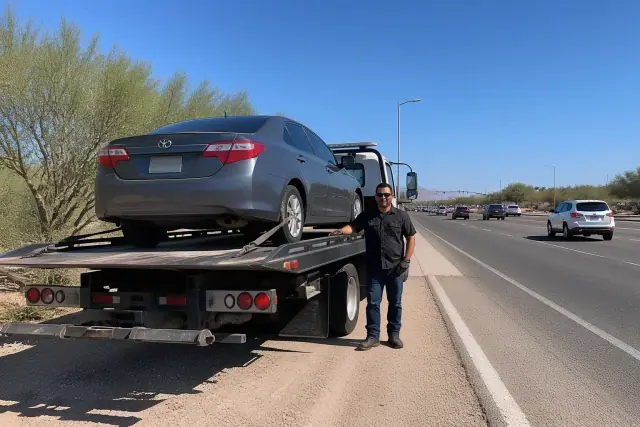
Light-duty towing covers vehicles under 10,000 lbs GVWR, including sedans, SUVs, crossovers, and pickups. Drivers choose wheel-lift or flatbed equipment after checking drivetrain, locking hubs, parking-brake engagement, and steering lock.

Medium Duty Towing

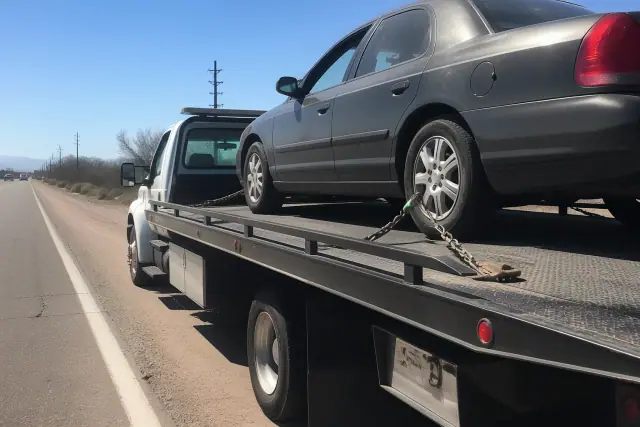
A flatbed tow truck with a secured sedan on a busy road in Sahuarita, AZ, showing winch cables and chains.

Medium-duty towing is sized for vehicles from 10,001-26,000 lbs GVWR, such as box trucks, cargo vans, small RVs, and dually pickups pulling trailers. Reinforced tow slings and higher-capacity winches help keep these loads within the equipment's limits.

Heavy Duty Towing

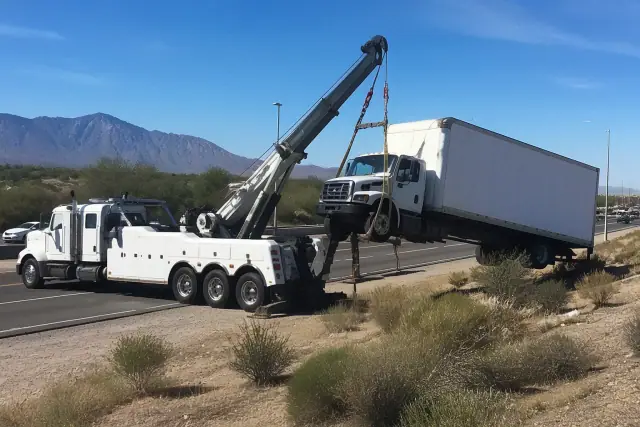
Heavy-duty wrecker truck lifting a commercial vehicle on a highway shoulder in Sahuarita, AZ with desert mountains.

Heavy-duty towing handles vehicles over 26,000 lbs GVWR, including semi-trucks, buses, and commercial rigs moving along I-19. Recoveries may require a heavy wrecker with air-brake capability, a rotator for rollover work, and a driver trained for commercial vehicle recovery.

Accident Recovery

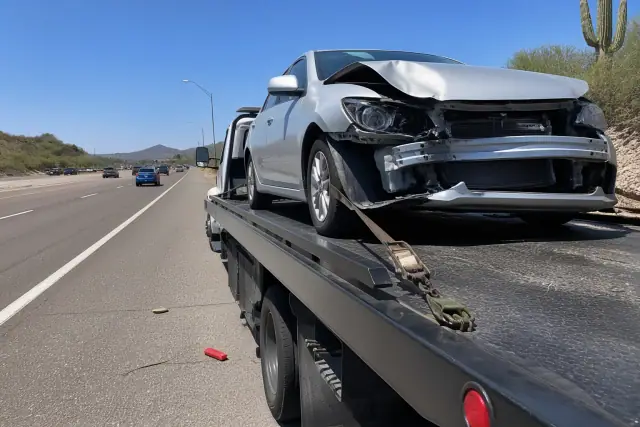
A flatbed tow truck recovering a damaged sedan with front-end collision debris on a road in Sahuarita, AZ.

Collision recovery begins with checks for frame damage, fluid leaks, and airbag deployment before hookup. Crews can coordinate with the Sahuarita Police Department or Pima County Sheriff's Department and use winch equipment for vehicles in a wash, off the roadway, or down an embankment.

Long Distance Towing

Heavy-duty truck towing a vehicle on a trailer in a roadside pull-off in Sahuarita, AZ, with desert mountains in view.

Long-distance towing supports transport beyond the immediate Sahuarita service radius, including trips to Phoenix, Nogales, or California. Longer hauls generally reflect fuel, driver time, and equipment wear in their per-mile rates, so pickup windows are coordinated in advance.

Car Lockout & Jump Start Service

A flatbed truck with a disabled sedan secured on the deck parked on a busy road in Sahuarita, AZ.

Non-destructive entry tools help resolve car lockouts without harming window seals, lock cylinders, or interior trim, and most lockouts take only a matter of minutes once the truck arrives. Heavy-duty jump boxes support standard, V8, and diesel applications, and alternator output can be checked on request.

Choosing Safe Towing

How to Choose the Right Tow in Sahuarita

The safest towing option depends on vehicle weight, drivetrain, existing damage, roadway conditions, and the type of recovery. Clear location details and an accurate description of the vehicle help dispatch match the call with suitable equipment before the truck arrives.

Vehicle Weight Class

Passenger vehicles, box trucks, small RVs, buses, and semi-trucks require different towing capacities. Giving dispatch the vehicle type and any trailer details helps prevent an undersized truck from being sent.

Drivetrain-Safe Tow Method

All-wheel-drive vehicles can suffer transmission or transfer-case damage when towed incorrectly. A driver should identify the drivetrain and determine whether wheel-lift or flatbed equipment fits the vehicle and its condition.

Secure Motorcycle Transport

A motorcycle call needs dedicated chocks and soft ties rather than the chains and hooks used on cars. Proper equipment keeps the bike upright and protects its frame, fairings, exhaust, and paint during transport.

Heavy Recovery Equipment

Commercial recoveries can require reinforced towing gear, higher-capacity winches, air-brake capability, or a rotator for a rollover. A jackknifed trailer near the Sahuarita interchange cannot be managed safely by a light-duty truck.

Accurate Location Details

An I-19 mile marker or nearest exit is more useful to dispatch than a general address. On local roads, share the road name, direction of travel, nearby intersection, and whether the vehicle is safely off the traffic lane.

Roadway Safety Assessment

Before hookup, the driver should assess traffic exposure, the vehicle's position, and hazards around the scene. Cones or flares may be placed when needed, with extra care on high-speed stretches of I-19 and blind curves on rural county roads.

Sahuarita Roadside Issues

Common Roadside Problems in Sahuarita

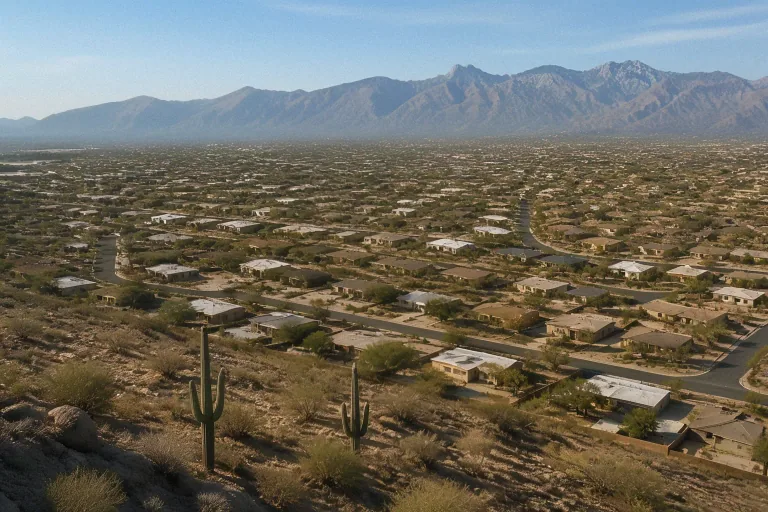
Sahuarita's population has grown past 35,600 in recent years, adding traffic to roads that were not originally built for today's volume. Extreme heat, seasonal storms, commercial traffic, desert washes, and long gaps between some I-19 exits can turn common vehicle problems into urgent roadside situations.

Request Roadside Help

Extreme Heat Stress

Summer pavement temperatures regularly exceed 150 degrees on Sahuarita asphalt. That heat accelerates tire blowouts, cooling-system failures, and overheating, particularly in older vehicles.

Monsoon Dust & Flash Flooding

Monsoon season from July through September can bring sudden dust storms, locally called haboobs, and flash flooding through washes that cross Sahuarita Road and Pima Mine Road. Those conditions can reduce visibility, leave vehicles off the roadway, or make a normal hookup unsafe until the scene is assessed.

Battery Failure

Extreme summer heat accelerates battery degradation and shortens battery life, while unexpected winter-morning frost can also weaken performance. A jump may solve the immediate problem, but alternator output matters if the charging system is not functioning.

Collision & Off-Road Damage

A collision can leave frame damage, leaking fluids, or deployed airbags that change the towing approach. Vehicles that enter a desert wash or leave an embankment may also require winching and coordination with responding law enforcement.

Lockouts & Dead Keyfobs

A dead keyfob or keys left in the ignition can strand a driver in shopping-center parking lots along Duval Mine Road. Non-destructive entry tools are designed to reach the lock without damaging seals, cylinders, or interior trim.

Isolated Roadside Breakdowns

A breakdown near the Tohono O'odham Nation boundary or along an isolated stretch of Pima Mine Road can leave drivers far from a well-lit parking area. Limited cell coverage in some outlying areas and long gaps between exits increase the importance of sharing precise location details early.

Why Choose Us

Why Call Tucson Towing Co. in Sahuarita?

Towing decisions should account for the vehicle, the scene, and the destination rather than relying on one hookup method for every call. Tucson Towing Co. gathers those details at dispatch, evaluates hazards on arrival, and confirms the requested drop-off before transport.

Local Route Knowledge

Dispatchers know Sahuarita's street grid and routes from I-19 to Duval Mine Road, Sahuarita Road, Pima Mine Road, and Nogales Highway. That familiarity reduces guesswork when a caller provides a mile marker, exit, or nearby intersection.

24/7 Dispatch

Breakdowns and lockouts do not follow business hours, so towing dispatch runs around the clock. The dispatch team tracks trucks already in the field and can route an available nearby unit based on the call details.

Vehicle-Specific Hookup

Drivers check the drivetrain, locking hubs, parking brake, steering lock, existing damage, and sensor placement before securing a vehicle. The selected method is based on those conditions and manufacturer-specific towing guidance.

Simple Dispatch Process

Our Sahuarita Towing Process

A clear dispatch process helps match the right truck to the call and keeps safety decisions in the proper order. Share where you are, describe the vehicle and problem, then confirm where the vehicle should go after it is assessed and secured.

01.

Share Your Location

Provide the road, direction of travel, and a nearby landmark, intersection, mile marker, or exit. Mention whether the vehicle is in a travel lane, on a shoulder, in a parking lot, or off the roadway.

02.

Describe the Vehicle and Problem

Tell dispatch the vehicle type, approximate size, drivetrain if known, and whether a trailer is attached. Explain if the call involves a breakdown, collision, lockout, dead battery, flat tire, or off-road recovery.

03.

Dispatch the Suitable Truck

Dispatch uses the location, vehicle class, and recovery details to select an available unit with suitable towing capacity and equipment. A nearby truck already in the field may be redirected when it fits the call.

04.

Assess the Scene

On arrival, the driver checks roadway exposure, surrounding hazards, vehicle damage, fluid leaks, and airbag deployment. Safety cones or flares may be used before any hookup begins.

05.

Secure the Vehicle

The driver confirms the tow method, checks items such as steering lock and parking-brake engagement, and secures the vehicle with equipment suited to its class and condition. Motorcycle, flatbed, and heavy-recovery calls each use different securement methods.

06.

Confirm and Transport

Before leaving, the driver confirms the repair shop, home, dealership, or other destination and any drop-off instructions. The secured vehicle is then transported to the location chosen by the customer.

Typical Service Scenarios

Roadside Situations We Handle in Sahuarita

Case Study 1: Passenger-vehicle breakdown: A sedan, SUV, or pickup that stops on I-19 can be assessed for wheel-lift or flatbed towing based on drivetrain, damage, and roadside position.

Case Study 2: Commercial-vehicle call: A box truck, dually pickup, bus, or semi along the Nogales Highway corridor requires towing equipment matched to its weight class and recovery needs.

Case Study 3: Off-road recovery: A vehicle in a desert wash or down an embankment is checked for hazards and damage before winch equipment is positioned for recovery.

Call for Vehicle Help

Get Towing Help
in
Sahuarita

Share your location, vehicle type, and roadside situation so dispatch can identify a suitable truck and towing method. Tucson Towing Co. handles towing and roadside calls throughout Sahuarita at any hour.

Local Towing Help

Sahuarita Towing FAQs

These answers cover dispatch details, vehicle classes, tow methods, roadside services, local conditions, and transport options described for Sahuarita-area calls.

Call Tucson Towing Co.

Yes. Tucson Towing Co. runs 24/7 towing in Sahuarita, Corona de Tucson, Green Valley, and the surrounding Pima County area, with dispatch available outside normal business hours.

Services include emergency towing, roadside assistance, flatbed and motorcycle towing, light-, medium-, and heavy-duty towing, accident recovery, long-distance transport, car lockout help, and jump starts. Roadside assistance also covers flat-tire changes, fuel delivery, and minor mechanical help.

Share your exact location, vehicle type, and what happened. If you are on I-19, provide the nearest mile marker or exit; also mention traffic exposure, a trailer, collision damage, or whether the vehicle is off the roadway.

Light-duty towing generally covers vehicles under 10,000 lbs GVWR, including sedans, SUVs, crossovers, and pickups. The driver chooses wheel-lift or flatbed equipment after checking the vehicle's drivetrain and condition.

Medium-duty towing covers vehicles from 10,001-26,000 lbs GVWR, such as box trucks, cargo vans, small RVs, and dually pickups pulling trailers. These calls need heavier-rated gear, including reinforced tow slings and higher-capacity winches.

Heavy-duty towing is intended for vehicles over 26,000 lbs GVWR, including semi-trucks, buses, and commercial rigs. A rollover or jackknifed trailer may require a heavy wrecker with air-brake and rotator capability.

Flatbed towing keeps all four wheels off the ground and is commonly recommended for lowered vehicles, classics, motorcycles, and vehicles with frame or drivetrain damage. It also helps protect newer vehicles with low-mounted lane-assist cameras and parking sensors.

Yes. Motorcycle towing uses specialized wheel chocks and soft-tie straps to secure the bike without damaging its frame, fairings, exhaust, or paint, and the bike is transported flat to a garage or repair shop.

Often, yes. Flat-tire changes, fuel delivery, and minor mechanical assistance may get a vehicle moving again without loading it onto a tow truck; the situation is evaluated to determine whether transport is still necessary.

Lockout service uses non-destructive entry tools intended to protect window seals, lock cylinders, and interior trim. Jump-start trucks carry heavy-duty jump boxes for standard, V8, and diesel applications, and alternator output can be checked on request.

The crew checks frame damage, fluid leaks, airbag deployment, roadway hazards, and the vehicle's position before hookup. Winch equipment may be used for a vehicle in a wash or off an embankment, with on-scene coordination when the Sahuarita Police Department or Pima County Sheriff's Department is responding.

Yes. Long-distance towing can be coordinated for destinations such as Phoenix, Nogales, or California, with pickup windows arranged in advance. Longer-haul per-mile rates generally reflect fuel, driver time, and equipment wear.

Summer pavement temperatures regularly exceed 150 degrees, contributing to blowouts, overheating, and battery degradation. From July through September, monsoon dust storms and flash flooding can reduce visibility and create hazardous recovery conditions around desert washes.

Arizona sets a maximum towing speed of 65 mph statewide, even on roads posted higher, and trailers over 3,000 pounds GVWR must have functioning brakes. Non-consensual tows are governed by Arizona Revised Statutes Title 28 and generally involve owner notification and proper storage documentation.

Coverage includes Rancho Sahuarita, Quail Creek, Madera Highlands, Continental, the commercial corridors along Nogales Highway and Sahuarita Road, and older neighborhoods near the town center. Trucks also run to Corona de Tucson, Green Valley, surrounding Pima County areas, and Tucson proper 15 miles north on I-19.