Proudly serving Tucson, Oro Valley, Marana, Sahuarita, Green Valley, Vail & surrounding areasCall or Text 24/7: +1 (520) 567-5263

Light Duty Towing in Tucson, AZ for Passenger Cars, SUVs & Standard Pickups

Tucson Towing Co. provides light duty towing across Tucson for sedans, coupes, hatchbacks, minivans, SUVs, and standard pickups. Our crews also handle flatbed towing, motorcycle towing, accident recovery, long-distance towing, and roadside assistance. Wheel-lift and flatbed equipment lets dispatch match the tow method to the vehicle's drivetrain, condition, and size. When a passenger vehicle or light truck needs to move without further damage, a live dispatcher can send the nearest qualified truck.

Tucson's 100-plus-degree days from June through September are hard on batteries, cooling systems, and tire pressure. A disabled vehicle on Speedway Boulevard, Oracle Road, I-10, or I-19 can become a traffic and heat-exposure hazard quickly. Dispatch operates 24/7 with GPS-routed trucks staged across the metro area, while operators use proper axle strapping, dolly setup, and load securing. Commercial auto liability coverage, certified operators, and Arizona Department of Public Safety towing regulations support a professional response.

Call with your location, vehicle type, and situation to receive a driver name, truck description, and realistic arrival window.

Tucson Towing Co. provides light duty towing throughout Tucson, Oro Valley, Marana, Sahuarita, Vail, and the greater Pima County metro area.

★ ★ ★ ★ ★4.9/5 Average Rating · 20+ Years of Experience · Thousands of Customers Helped · Licensed & Insured · Residential & Commercial

Light Duty Towing Options & Benefits

What Is Light Duty Towing?

Light duty towing covers passenger vehicles and light trucks under roughly 10,000 pounds GVWR, including sedans, coupes, hatchbacks, minivans, SUVs, and standard pickups. It is the most common tow-truck category for everyday breakdowns and transport.

Wheel-lift trucks work well for many standard front-wheel-drive vehicles, while flatbeds keep all wheels off the pavement for AWD, 4WD, low-clearance, classic, or collision-damaged vehicles. Drivetrain, tire, steering, and suspension condition guide that choice.

Common calls include dead batteries, blown alternators, overheated engines, flat tires without a usable spare, transmission failures, and collision damage. Matching the equipment and securing the load correctly helps prevent additional damage during transport.

Benefits of Professional Light Duty Towing

A professional response combines the right truck, a clear dispatch process, safe scene practices, and careful vehicle handling from pickup through drop-off.

  • 24/7 dispatch every day of the year, including weekends, holidays, and overnight hours
  • A live dispatcher who gathers your location, vehicle type, and situation
  • GPS tracking that helps route the nearest qualified truck and adjust for traffic
  • Wheel-lift, dolly, or flatbed handling selected for the vehicle and damage
  • Reflective gear and scene lighting for lower-visibility roadside calls
  • On-site jump starts, lockout help, fuel delivery, and flat-tire changes when a tow is unnecessary
  • Written towing quotes that clarify vehicle class, distance, and equipment before dispatch
  • Driver name, truck description, and a realistic arrival window before the wrecker arrives
Towing & Roadside Services

Complete Light Duty Towing Services

From a stalled commuter car to a damaged pickup or a motorcycle that needs specialized transport, Tucson Towing Co. matches the response to the vehicle, roadside conditions, and requested destination.

Emergency Towing

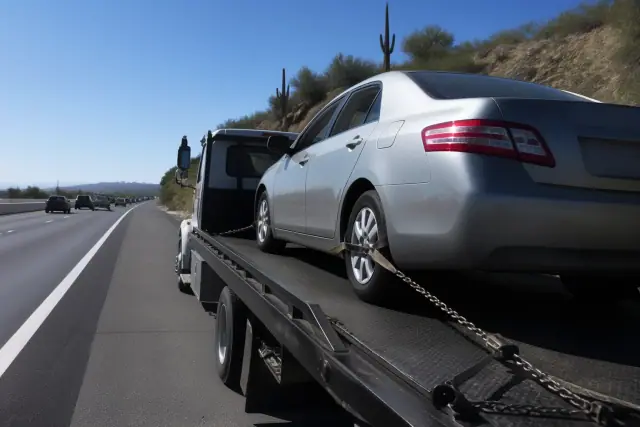
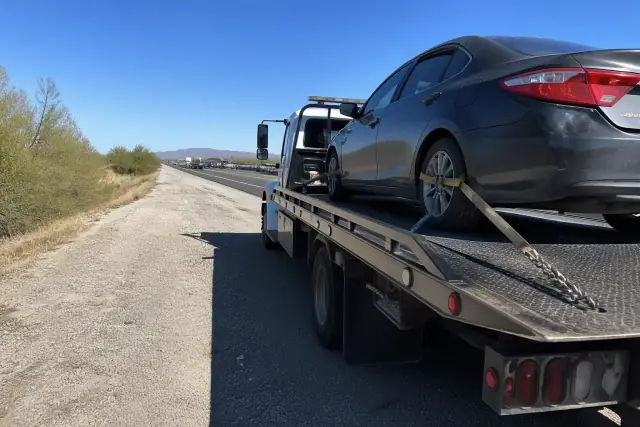
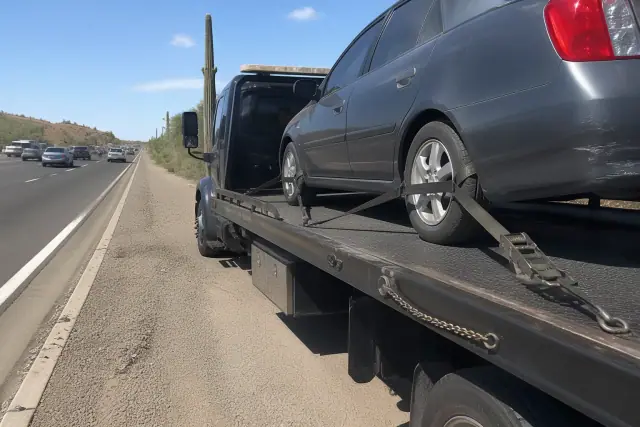
Flatbed tow truck with a secured sedan on a highway shoulder in Tucson, AZ, showing safety chains and a winch cable.

Emergency towing covers stalled vehicles, mechanical failures, blowouts, and disabled cars blocking traffic. Dispatch prioritizes lane hazards on roads such as Grant Road, Speedway Boulevard, and Oracle Road, including breakdowns during a 108-degree July afternoon.

Request Estimate

Roadside Assistance

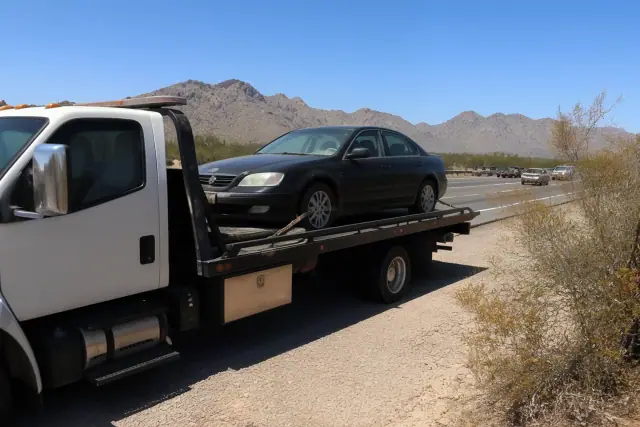
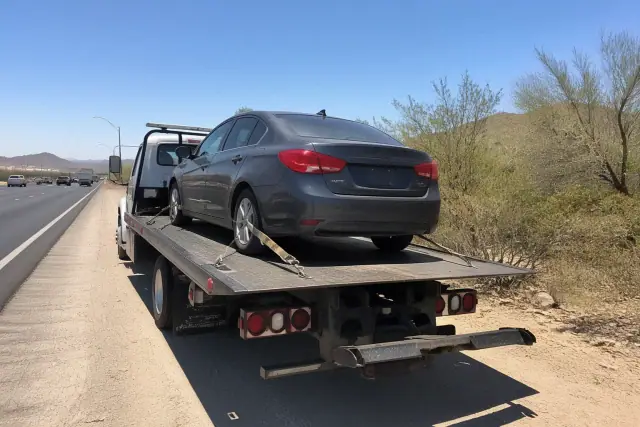
Flatbed tow truck with a secured sedan on the side of a road in Tucson, AZ, with desert mountains in the background.

Roadside assistance can resolve many calls without a tow. Service includes commercial-grade jump starts followed by a charging-system check, non-destructive lockout entry, fuel delivery, flat-tire changes, and basic mechanical troubleshooting.

Request Estimate

Flatbed Towing

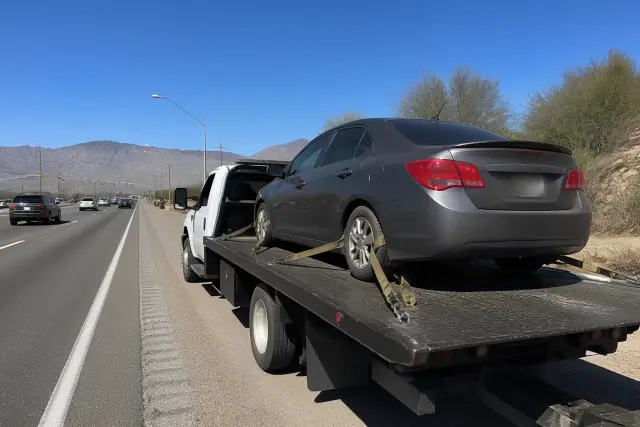
A flatbed tow truck with a disabled sedan secured on a desert road in Tucson, AZ, with mountains in the background.

Flatbed towing keeps all four wheels off the road, protecting AWD and 4WD drivetrains, low-clearance vehicles, classic cars, and vehicles with existing damage. Four-point wheel-well strapping limits suspension movement, while the deck avoids added stress on damaged tires when Tucson asphalt temperatures exceed 150 degrees.

Request Estimate

Motorcycle Towing

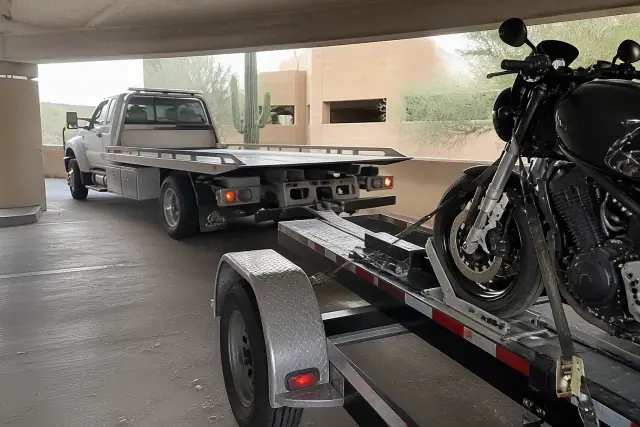
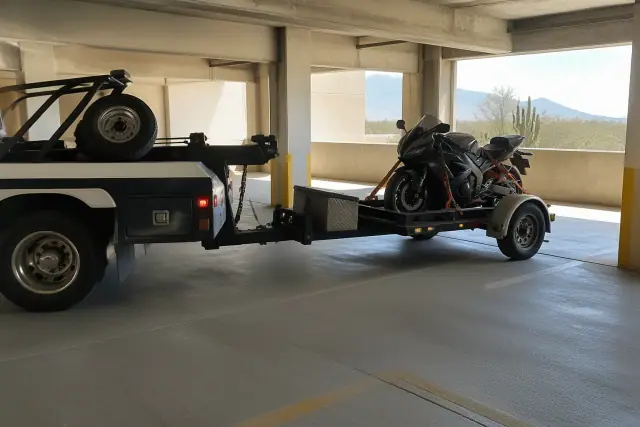
Low-clearance tow truck securing a motorcycle with nylon straps in a Tucson, AZ parking garage.

Motorcycle transport uses wheel chocks, rubber-matted flatbed decks, and low-profile soft ties anchored to the frame rather than the handlebars. Operators adjust anchor points for different weight distributions, from a 500-pound cruiser to a lightweight sport bike, and use a shallow ramp angle to protect fairings and low-slung exhausts.

Request Estimate

Accident Recovery

A flatbed truck with a secured sedan on a highway shoulder in Tucson, AZ, surrounded by desert creosote bushes.

Collision recovery begins with cones, reflective triangles, and photographs of vehicle position and damage. The operator checks steering, suspension, and tire condition before choosing the tow method, then coordinates the requested body shop, storage location, and available insurance paperwork.

Request Estimate

Long-Distance Towing

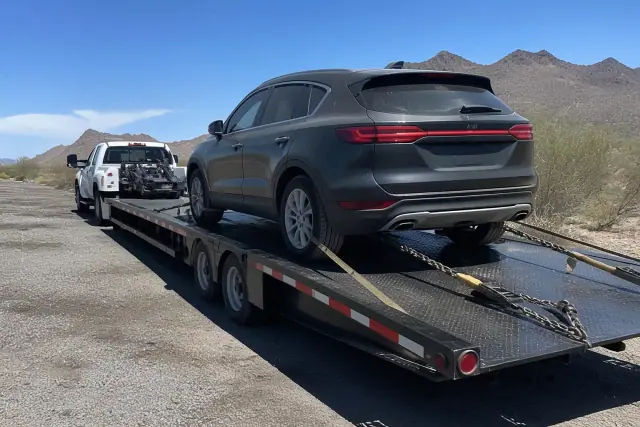
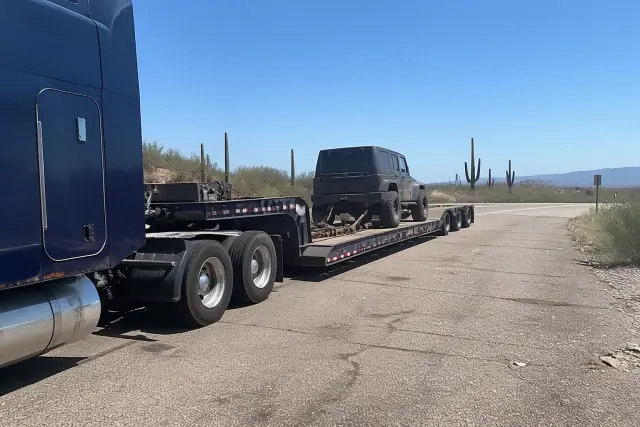
Heavy-duty truck towing a transport trailer in the Tucson, AZ desert with safety chains and tie-down ratchets secured.

Long-distance service covers transport beyond Pima County, including Phoenix about 108 miles northwest, Sierra Vista, multi-stop routes, and cross-state hauls. The total is set before dispatch, with driver contact information and expected arrival windows provided for the trip.

Request Estimate
Transport & Equipment Options

Light Duty Towing Options

The safest approach depends on drivetrain, ground clearance, existing damage, roadside conditions, and whether the problem can be corrected on site. Dispatch uses those details to send a truck with suitable equipment.

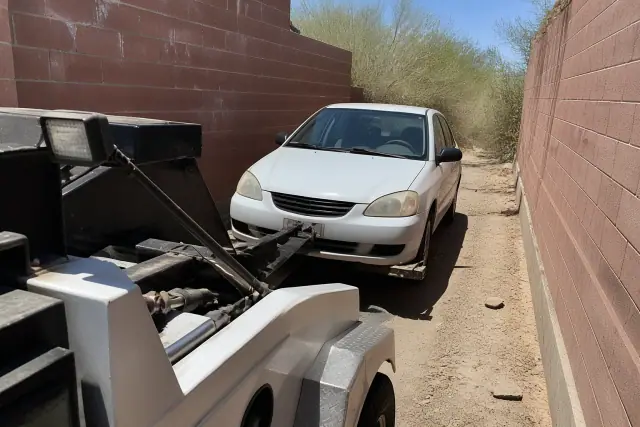
Light-duty tow truck using a wheel-lift to retrieve a compact car from a narrow alleyway in Tucson, AZ.

Wheel-Lift Towing

Wheel-lift towing raises one axle while the other wheels roll on the pavement. It is often suitable for standard front-wheel-drive passenger vehicles when the rolling axle, tires, and steering components are sound.

  • Useful for many routine, shorter-distance passenger-vehicle tows
  • Dolly setup can keep an additional axle off the road when appropriate
  • Axle strapping and load securing stabilize the vehicle for transport
  • Vehicle drivetrain and damage must be checked before hookup
  • Not the preferred method when every wheel must remain off the pavement
Request Estimate
Flatbed tow truck securing a sedan with straps on a highway shoulder in a Tucson, AZ desert landscape.

Flatbed Transport

A flatbed carries the entire vehicle on its deck, eliminating tire contact with the roadway. It is the protective choice when drivetrain configuration, low clearance, or damage makes wheel-lift towing risky.

  • Keeps AWD and 4WD drivetrains from rolling during transport
  • Protects lowered bumpers, undercarriages, and classic vehicles
  • Avoids loading a damaged tire or wheel on hot pavement
  • Supports vehicles with compromised steering or suspension
  • Wheel straps are checked before the truck enters highway traffic
Request Estimate
Flatbed tow truck with a disabled sedan secured on the highway shoulder in Tucson, AZ.

On-Site Roadside Equipment

A service truck may solve the problem where the vehicle stopped, avoiding unnecessary transport. Dispatch selects roadside equipment from the caller's description of the vehicle and symptoms.

  • Commercial-grade jump boxes for compact sedans through diesel pickups
  • Charging-system testing after a successful jump start
  • Slim jims, wedge-and-rod kits, and long-reach lockout tools
  • Fuel delivery for an empty tank
  • Flat-tire changes and basic mechanical troubleshooting
Request Estimate
Motorcycle secured with ratchet straps on a trailer in a concrete parking garage in Tucson, AZ.

Motorcycle Transport Setup

Two-wheel transport requires purpose-built restraint points and controlled loading. The setup keeps the motorcycle upright without crushing fairings, bending controls, or scratching painted surfaces.

  • Motorcycle-specific wheel chocks stabilize the front wheel
  • Soft ties anchor to the frame instead of handlebars or bodywork
  • Rubber-matted decks reduce shifting during braking and turns
  • Shallow loading angles protect low exhausts and fairings
  • Anchor placement is adjusted for cruiser and sport-bike weight distribution
Request Estimate
Heavy-duty transport trailer secured with chains and straps on a roadside in Tucson, AZ.

Recovery and Long-Haul Planning

Collision and long-distance calls need more planning than a routine local hookup. Scene condition, vehicle damage, destination, route, and documentation all affect the dispatch plan.

  • Photographs preserve vehicle position and visible damage before movement
  • Cones and reflective triangles establish a safer roadside work area
  • Steering, suspension, and tire checks determine the loading method
  • The requested repair shop, storage yard, dealership, or family destination is confirmed
  • Driver contact and arrival windows keep longer transports on schedule
Request Estimate
Finding Your Right Fit

Choosing the Right Towing Approach

Tell dispatch what you drive, where it stopped, whether it rolls or steers, and what happened before the breakdown. Those details help determine whether roadside help, wheel-lift towing, dollies, a flatbed, or recovery equipment is appropriate.

Vehicle-Matched Towing Equipment

Operators choose wheel-lift, dolly, or flatbed handling around drivetrain, ground clearance, tire condition, steering, suspension, and collision damage. That vehicle-specific decision protects components that could be harmed by the wrong towing method.

GPS-Routed Live Dispatch

A live dispatcher routes the nearest available qualified truck and can adjust when I-10 traffic or a crash near the Ina Road bridge changes the route. Trucks staged across the metro area help avoid sending every call from a single yard.

Trained and Regulated Operators

Tucson Towing Co. operates as a licensed, insured towing company with commercial auto liability coverage. Certified towing operators are trained in wheel-lift and flatbed procedures, load securing, scene safety, and non-destructive lockout entry under Arizona Department of Public Safety towing standards.

What Sets Us Apart

Why Choose Us for Light Duty Towing?

The difference is disciplined dispatch and careful handling: a live person gathers the right information, assigns suitable equipment, shares arrival details, and sends an operator who understands Tucson's road grid. Upfront quotes, vehicle documentation, and clear destination coordination keep the tow understandable from the first call to drop-off.

Request Towing Help

Battery or Charging Failure

Extreme summer heat shortens the effective life of lead-acid batteries and can expose alternator trouble. A commercial jump box may restart the vehicle, and a charging-system test helps determine whether it can continue safely or needs a tow.

Overheated Engine

High ambient temperatures and climbs such as Gates Pass put extra strain on cooling systems. If the engine overheats, transporting the vehicle instead of continuing to drive can prevent a roadside problem from becoming more serious damage.

Flat Tire Without a Spare

Heat and road conditions can worsen tire-pressure problems and blowouts. When no usable spare is available or the wheel is damaged, a flatbed keeps the compromised tire off the road during transport.

Drivetrain or Transmission Failure

A transmission failure may leave the vehicle unable to roll normally, while AWD and 4WD systems can be damaged if the wrong wheels remain on the road. Dispatch uses the drivetrain and symptoms to decide whether dollies or a flatbed are required.

Vehicle Lockout or Empty Tank

Locked keys and an empty fuel tank usually call for roadside service rather than a tow. Non-destructive entry tools are designed to protect weatherstripping, trim, and lock components, while fuel delivery can get a stranded driver moving again.

Collision Damage in Traffic

A damaged vehicle near Houghton Road or the I-10/I-19 interchange needs scene control before it is moved. Operators document position and visible damage, inspect whether the vehicle can roll and steer, and plan transport to the requested shop or storage location.

How it works

Our Light Duty Towing Process

The process is designed to get the right truck to the right location with clear information before the hookup begins. Dispatch, assessment, securing, documentation, and destination confirmation each protect the vehicle and driver.

01.

Share Your Location and Vehicle Details

Tell the live dispatcher where the vehicle stopped, what you drive, what happened, whether it rolls or steers, and where it needs to go. These details narrow the equipment and operator requirements.

02.

Assign the Nearest Qualified Truck

Dispatch checks staged trucks, GPS position, traffic, vehicle class, and the equipment needed. Calls involving vehicles blocking traffic receive priority routing.

03.

Confirm the Driver and Arrival Window

You receive the assigned driver's name, a truck description, and a realistic arrival window. GPS tracking lets dispatch update the route when Tucson traffic conditions change.

04.

Assess the Scene and Tow Method

The operator checks traffic exposure, visibility, drivetrain, ground clearance, tires, steering, suspension, and visible damage. That assessment confirms whether roadside service, wheel-lift towing, dollies, or a flatbed is appropriate.

05.

Secure and Document the Vehicle

Collision calls are photographed before movement, and the vehicle is loaded using appropriate axle, wheel, dolly, or motorcycle restraints. Tie-downs are checked before the truck enters the highway.

06.

Transport to the Confirmed Destination

The driver transports the vehicle to the agreed repair shop, storage yard, dealership, auction house, or other destination. Longer trips include driver contact information and an expected arrival window.

Get Towing Help

Request Light Duty Towing Service

Share your Tucson-area location, vehicle type, symptoms, and preferred destination. Tucson Towing Co. can determine whether roadside assistance, wheel-lift towing, or a flatbed is the right response and provide the dispatch details.

Towing Help

Light Duty Towing FAQs

These answers explain Tucson towing costs, equipment, roadside decisions, long-distance transport, Arizona rules, and what to expect from dispatch.

Call Dispatch

A 200-mile tow typically combines a base hookup fee with a per-mile charge, often a few dollars per mile, and the final quote changes with vehicle size and flatbed versus wheel-lift equipment. Tucson Towing Co. provides a written total before dispatch so mileage, vehicle class, and any after-hours timing are clear before the truck leaves.

Arizona does not provide a blanket waiver, so begin by disputing an unreasonable charge with the storage facility. Keep the tow date, storage start date, posted rates, invoice, and any signage or authorization evidence; unresolved concerns may be taken to Pima County Consumer Protection, the Arizona Attorney General's consumer protection division, or small claims court.

Warning signs include arriving uninvited at a crash before police or an insurer called, refusing a written estimate, demanding cash only, hiding the storage-yard address, or adding undisclosed fees after hookup. A professional operator should identify the driver, disclose the destination and rates, and provide clear documentation.

Local Tucson towing can range from $60-$300 depending on distance, vehicle size, and time of day. Shorter tows sometimes fall in the $60-$120 range, while many local calls run $200-$300; after-hours timing and flatbed equipment can change the total, so request a written quote for the specific job.

A light-duty tow truck handles passenger vehicles and light trucks generally under 10,000 pounds GVWR, such as sedans, coupes, hatchbacks, minivans, SUVs, and standard pickups. Wheel-lift and flatbed configurations cover most everyday roadside, recovery, and short-distance transport calls in this class.

The 80/20 rule is a guideline used by towing operators and insurers when considering whether vehicle weight distribution and drivetrain make a wheel-lift tow appropriate. AWD and 4WD vehicles are more likely to need a flatbed so the transmission or transfer case is not damaged by wheels rolling during transport.

The Arizona Department of Public Safety Tow Service Program sets licensing, rotation, rate, and service standards for companies responding on state highways, while private-property tows have separate signage and notice requirements. A daily maximum storage rate around $32.50 applies to light-duty vehicles under 14,000 pounds GVWR, and vehicle owners should receive documentation and a clear invoice.

A flatbed is appropriate when all wheels must stay off the pavement to protect an AWD or 4WD drivetrain. It is also the safer choice when low ground clearance, collision damage, a compromised tire, or steering and suspension problems make wheel-lift transport risky.

Often, yes. Jump starts, charging-system checks, non-destructive lockout entry, fuel delivery, flat-tire changes, and basic troubleshooting can resolve the call on site; if the vehicle still cannot operate safely, dispatch can arrange the appropriate tow.

Motorcycles are stabilized with wheel chocks and low-profile soft ties secured to the frame rather than the handlebars. A rubber-matted deck and shallow loading angle help protect paint, fairings, controls, and low-slung exhaust components.

Light duty towing and roadside assistance are available throughout Tucson, Oro Valley, Marana, Sahuarita, Vail, and the greater Pima County metro area. Long-distance transport can continue beyond the local area to destinations such as Green Valley, Benson, Phoenix, Sierra Vista, or an agreed cross-state destination.

Provide your location, vehicle type, what happened, whether the vehicle rolls and steers, visible damage, and the requested destination. Dispatch uses those details to assign a qualified operator and suitable wheel-lift, dolly, flatbed, roadside, or recovery equipment.

Yes. Tucson Towing Co. runs around-the-clock dispatch every day of the year, including weekends, holidays, and overnight hours when many repair shops are closed. Trucks and operators are staged across the metro area, and GPS routing helps dispatch send the nearest qualified truck.